
English| USD
Suggested for you
More currencies
Choose a language
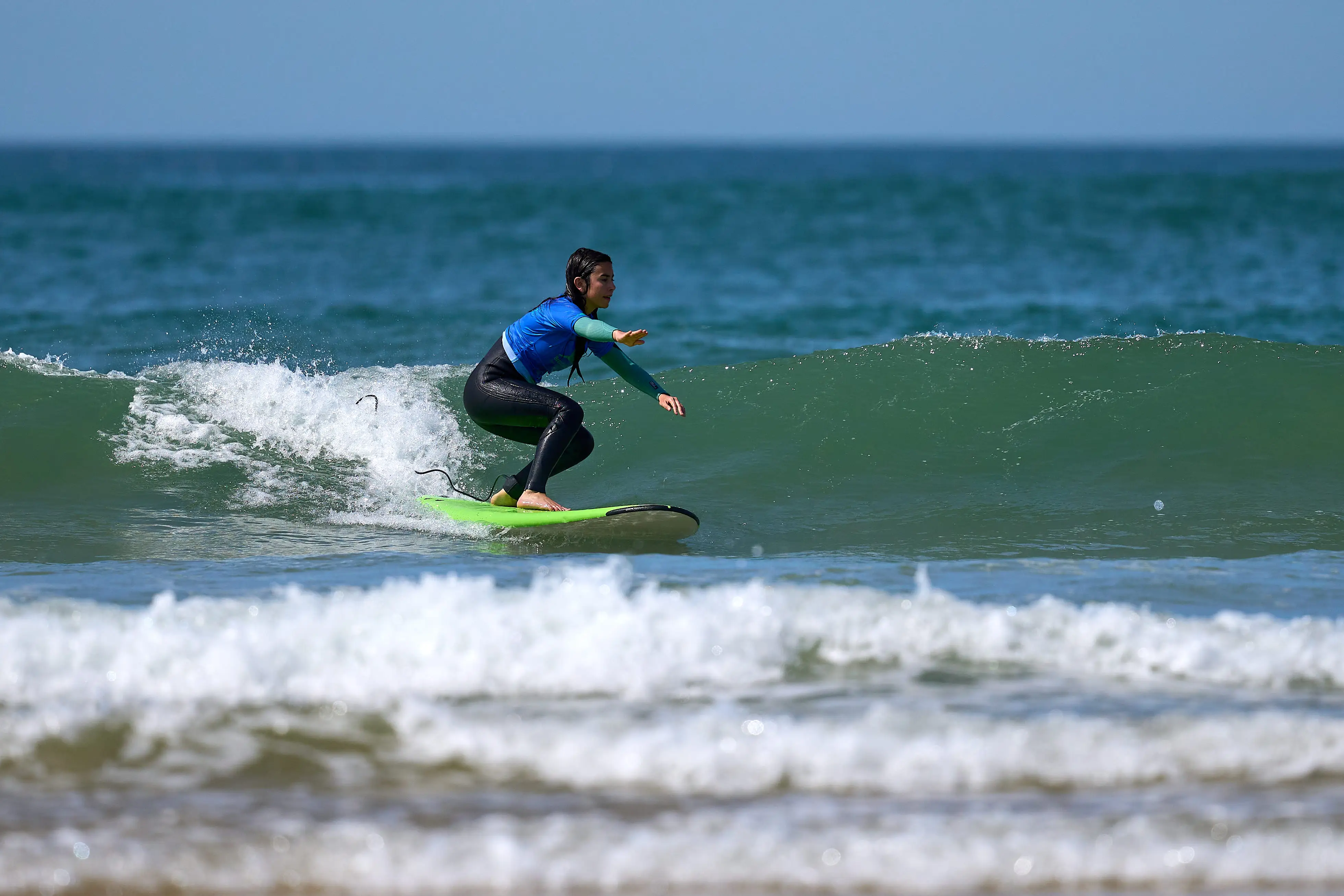
Costa da Caparica's consistent Atlantic swells and wide sandy beach make it one of the Lisbon region's most accessible surf-instruction venues. Classes run daily from 09:00 to 18:00, with morning and early-afternoon sessions offering the most favorable tide and wind conditions. Beach entry is free; lesson fees are charged per participant.
Quick answer
A costa da caparica surf class operates daily from 09:00 to 18:00, with the optimal arrival window between 09:00 and 17:00 to catch favorable tides and safe daylight conditions. The beach itself is free to access; lesson fees apply per person and vary by instructor, group size, and session duration. Morning sessions typically coincide with offshore winds and rising tides, while afternoon slots work best during summer's extended daylight hours.
Costa da Caparica sits fifteen kilometers south of central Lisbon, where the Tagus estuary opens to the Atlantic and a nineteen-kilometer stretch of sand catches consistent year-round swells. The beach's gradual slope and forgiving wave shape have made it a training ground for Portuguese surfers since the 1960s, and today it anchors the country's largest concentration of surf schools. Instructors schedule sessions around tidal cycles rather than fixed slots. Low tide exposes sandbars that create gentle, rolling waves ideal for first-time paddlers; high tide pushes water closer to the dunes and produces steeper faces suited to intermediate progression. Most schools run two-hour blocks starting at 09:00, 12:00, and 15:00, adjusting daily based on swell forecasts published by the Instituto Português do Mar e da Atmosfera. Autumn and winter bring larger groundswells from North Atlantic storms, while summer offers smaller, more predictable conditions and water temperatures above eighteen degrees Celsius. A costa da caparica surf class typically includes wetsuit and board provision, beach theory, paddling drills, and supervised practice in waist-deep water. Group instruction averages six to eight students per coach; private sessions allow faster skill progression but cost roughly double. The beach's northern end, near Praia do CDS, hosts the densest cluster of schools and benefits from lifeguard coverage from June through September. The southern stretches toward Fonte da Telha offer emptier lineups but require confident swimmers due to stronger currents and sparse supervision. Lesson logistics hinge on wind direction. Morning offshore breezes groom wave faces and hold them open longer, giving beginners more time to stand and balance. By midafternoon, the Atlantic's onshore thermal wind roughens the surface and collapses waves earlier, shortening the rideable window. Instructors monitor real-time buoy data and will postpone sessions if swell height exceeds one-point-five meters or wind speed tops twenty-five knots. Most schools require forty-eight hours' notice for cancellations and will not issue refunds for student no-shows, though they typically allow rescheduling within the same season.
“Instructors schedule sessions around tidal cycles rather than fixed slots, adjusting daily based on swell forecasts published by the Instituto Português do Mar e da Atmosfera.”
The best time to experience a surf class in Costa da Caparica is during the morning hours, specifically within the 09:00–17:00 arrival window. This timeframe aligns with optimal tidal movements and daylight, providing the most consistent conditions for instruction.
Warm temperatures, average 25–28°C
Morning sessions are essential to avoid peak beach crowds and midday winds.
Mild temperatures, average 18–22°C
These shoulder months offer favorable wave consistency and fewer people in the water.
Cooler temperatures, average 12–16°C
Surfing remains possible, though requires thicker wetsuits and attention to stronger swell conditions.
Verdict: For the most effective instruction, aim for weekday mornings during the shoulder months of April, May, September, or October.
Costa da Caparica surf classes operate on a consistent daily schedule to accommodate instructional sessions. You may book your session during these set hours throughout the week.
Access to the beach in Costa da Caparica is public and free of charge. Surf class fees are determined by individual surf schools based on the type of instruction and equipment provided.
Verdict: While beach entry costs 0 EUR, individual surf classes require payment at rates set by your chosen instructional provider.
Costa da Caparica is located south of Lisbon, accessible via public transport or private vehicle. Most visitors arrive via the main access roads connecting to the coastline.
TST bus from Cacilhas or Praça de Espanha to Costa da Caparica
A38 highway toward Costa da Caparica
Direct from Lisbon center
The optimal arrival window is 09:00–17:00 to align with safe wave conditions. Plan your route to arrive at the specific beach sector indicated in your booking confirmation.
Arrive prepared to make the most of your lesson and stay safe in the water.
Everything you need to know about costa da caparica surf class
A typical session begins with safety briefings and land-based technique practice before entering the water. Instructors guide participants on paddling, wave timing, and board positioning to ensure a safe experience.
Yes, schools cater to all levels, including absolute beginners who have never touched a surfboard. Instructors prioritize water safety and provide personalized feedback throughout your introduction to the Atlantic waves.
Entrance to the beach is 0 EUR, while specific surf lesson fees vary by provider and group size. You should check individual booking pages for exact rates per person regarding your chosen session.
The best arrival window is 09:00–17:00 to utilize optimal tides and daylight for safe instruction. We recommend arriving during these hours for the most favorable wave conditions.
Most providers include a surfboard and wetsuit as part of their instruction packages. Always confirm the specific inclusion details on the booking page before your arrival.
While you do not need to be an expert swimmer, basic comfort in the water is essential for your safety. Instructors supervise all activity near the shore where waves are manageable.
Instructors monitor weather and swell reports daily to ensure safety. If conditions become unsuitable, sessions are typically rescheduled to ensure a productive learning environment.
Most schools accept participants of various ages, though minors often require parental consent or accompaniment. Check specific requirements on the booking page to confirm eligibility for your group.